[Seasonal Offer] Masters of Their Craft
Unique ground, naval and air vehicles – in seasonal offers only!
Seasonal Offers
Commanders! 🚩 From February 9th to February 16th, 2026 (ends at 07:00 GMT), as part of a Seasonal Offer, a new set of unique premium vehicles will be available to you. After completing special Seasonal Challenges, you will be able to purchase it with a maximum discount:
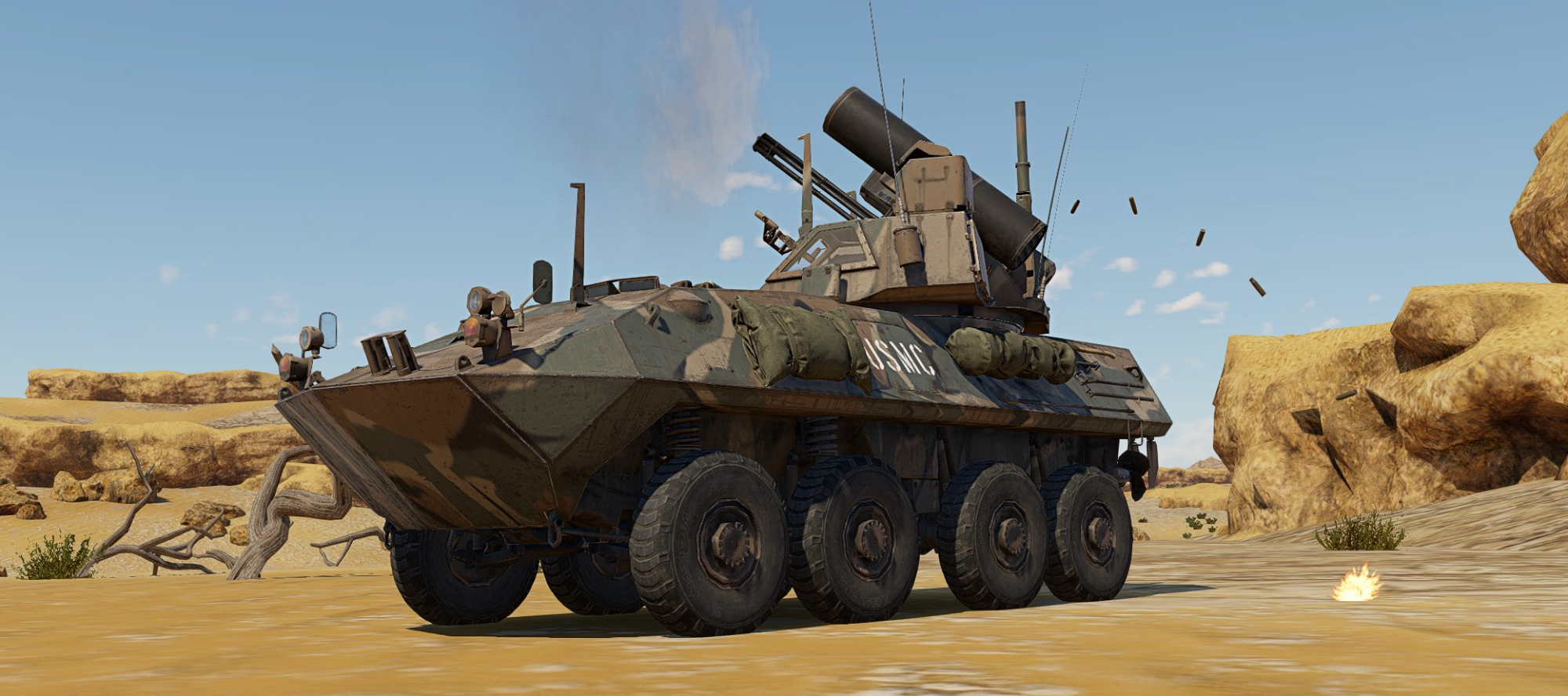
- In the Tank Campaign: LAV-AD + 4 Keys for the Big Trophy from the “Frost Edge” season + Back-ups x5, Repair Kits x100, Medical Kits x100, Fire Extinguishers x50.
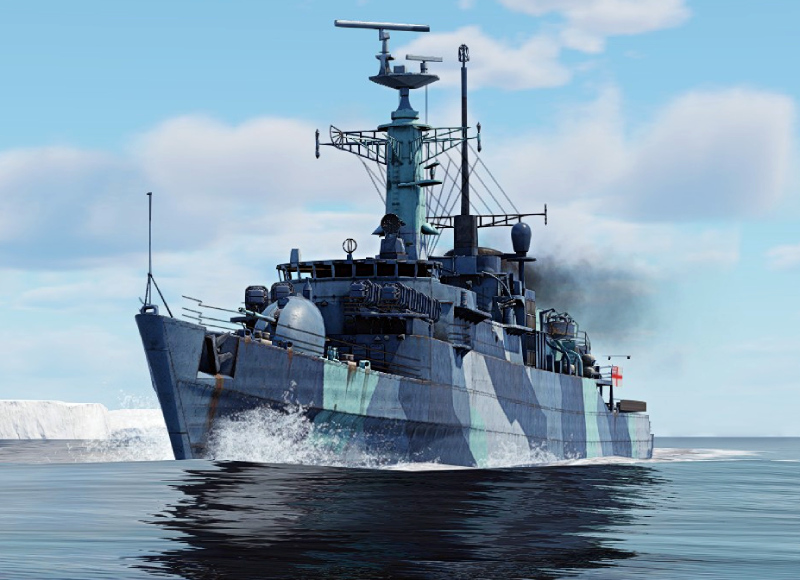
- In the Ship Campaign: España + 2 Keys for the Big Trophy from the “Frost Edge” season + Smoke Generators x250 + Naval Supply x250.
- In the Aviation Campaign: BI + 4 Keys for the Big Trophy from the “Frost Edge” season + Back-ups x10.
LAV-AD (Rank X)
Historical note
Development of the LAV-AD combat support vehicle was initiated by the United States Marine Corps in 1987 to create a mobile air defense system based on the LAV-25 wheeled armored vehicle. The project was implemented on a competitive basis by FMC Corporation and General Electric, which presented prototypes with different cannon armament. While FMC proposed using the proven 25 mm M242 cannon, General Electric bet on the more powerful and rapid-firing 25 mm five-barrel GAU-12 Equalizer series aircraft cannon, which was ultimately selected by the Marine Corps.
In the early 1990s, an order was placed for an initial batch of 125 vehicles. However, the program's implementation encountered serious difficulties. As a result, from 1996 to 1998, only 17 LAV-AD self-propelled systems were built and delivered to the troops. Their production and further program development were finally discontinued due to budget constraints and high operating costs.
SWOT Analysis
- Strengths: Rapid-fire 25 mm cannon, anti-aircraft missiles and unguided aircraft rockets, good mobility.
- Weaknesses: Low protection, large dimensions, high visibility.
- Opportunities: A fast support vehicle with effective armament against light armor and aircraft: autocannon, unguided rockets, and Stinger SAMs.
- Threats: Any vehicle with a 20+ mm caliber gun, aircraft bombs and rockets, high-explosive shells, fire from the flanks and rear.
In battle
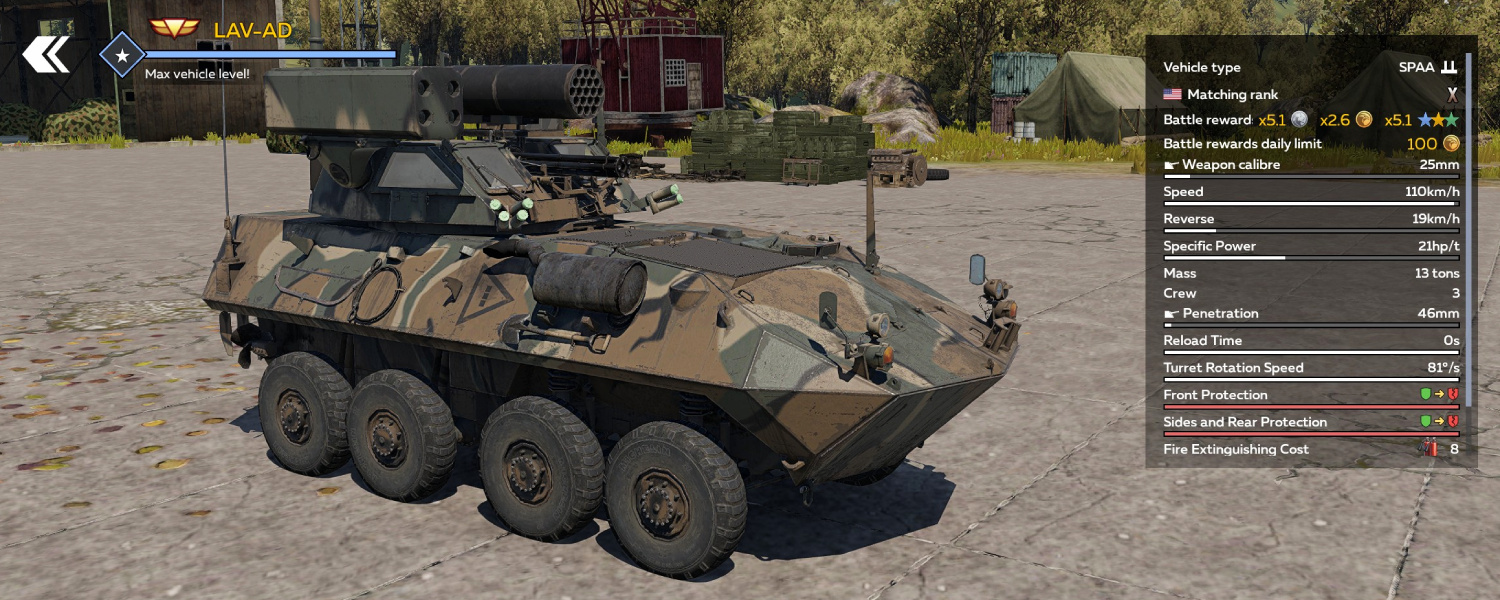
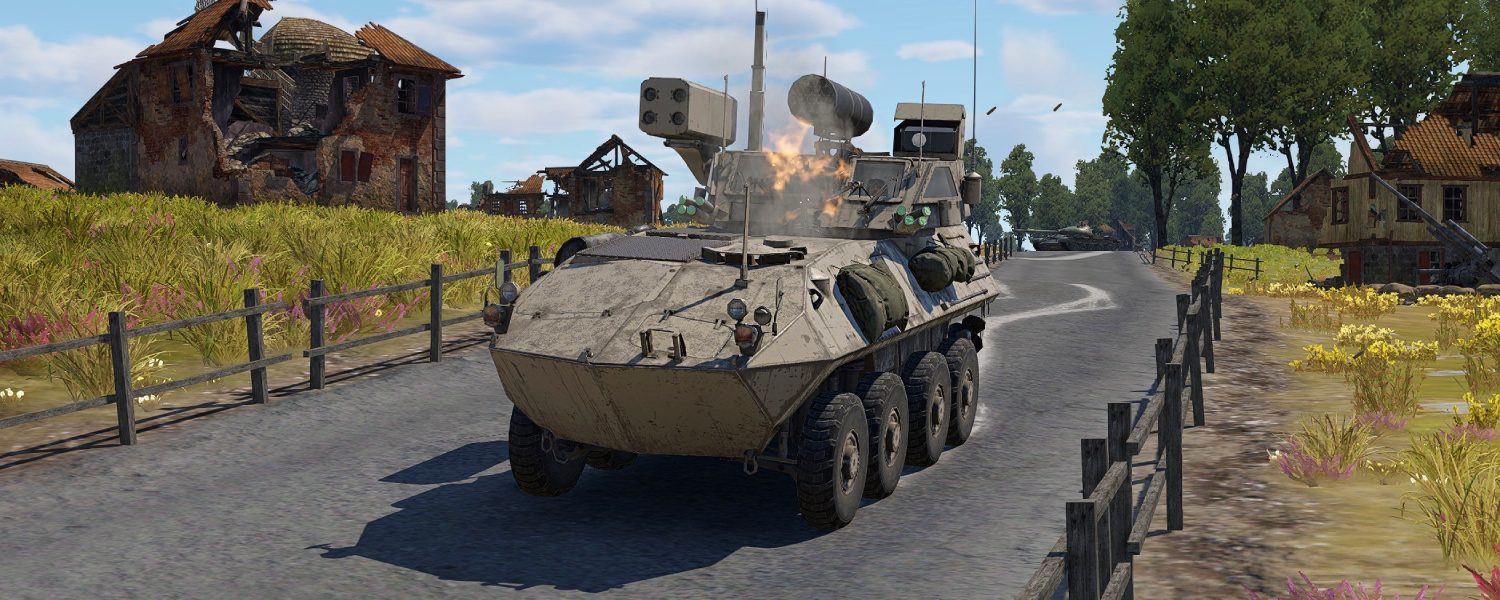
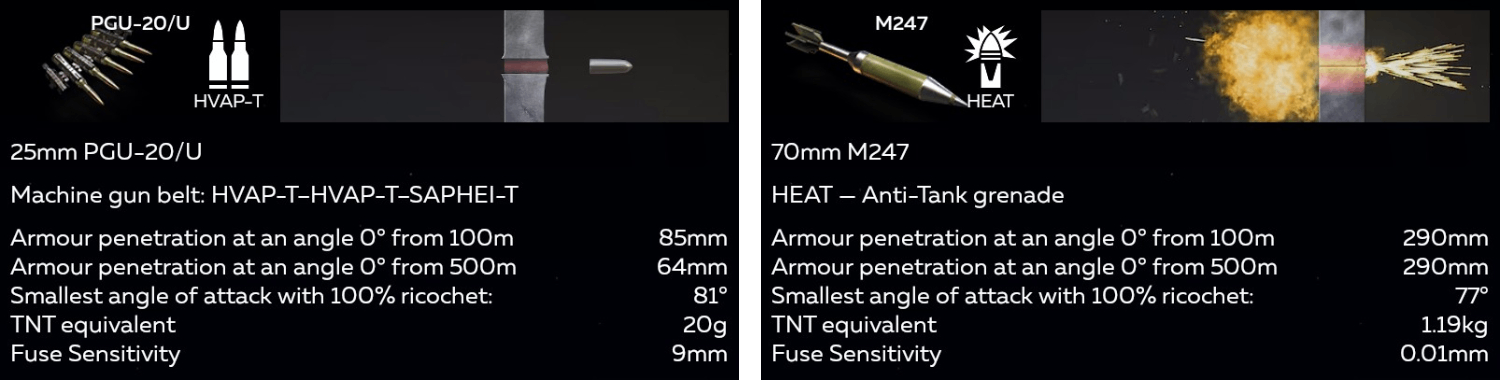
The LAV-AD is a unique combat vehicle with combined armament. This fast wheeled reconnaissance/anti-aircraft vehicle is armed with a 25 mm automatic cannon featuring a rotating barrel block, the GAU-12U, well-known to aviation enthusiasts from the modern American AC-130 gunship. The five-barrel cannon fires at a rate of up to 1800 rounds per minute, and its ammunition belts contain Semi armor-piercing high-explosive incendiary tracers shells (SAPHEI-T) and High-velocity armor-piercing (HVAP) shells. The LAV-AD is equally effective at destroying lightly armored ground targets and low-flying aircraft. Furthermore, the LAV-AD carries a launcher pod with Stinger surface-to-air missiles, as well as a pod of Hydra unguided aircraft rockets. A salvo of them can turn a narrow street or a small area on the map into a boiling cauldron of explosions!
View the characteristics of the LAV-AD’s shells:
View the characteristics of the LAV-AD’s shells:
Like most modern wheeled armored vehicles, the LAV-AD has excellent speed characteristics and can accelerate to over 100 km/h. Its high power-to-weight ratio comes at the cost of light, small-arms-resistant armor.
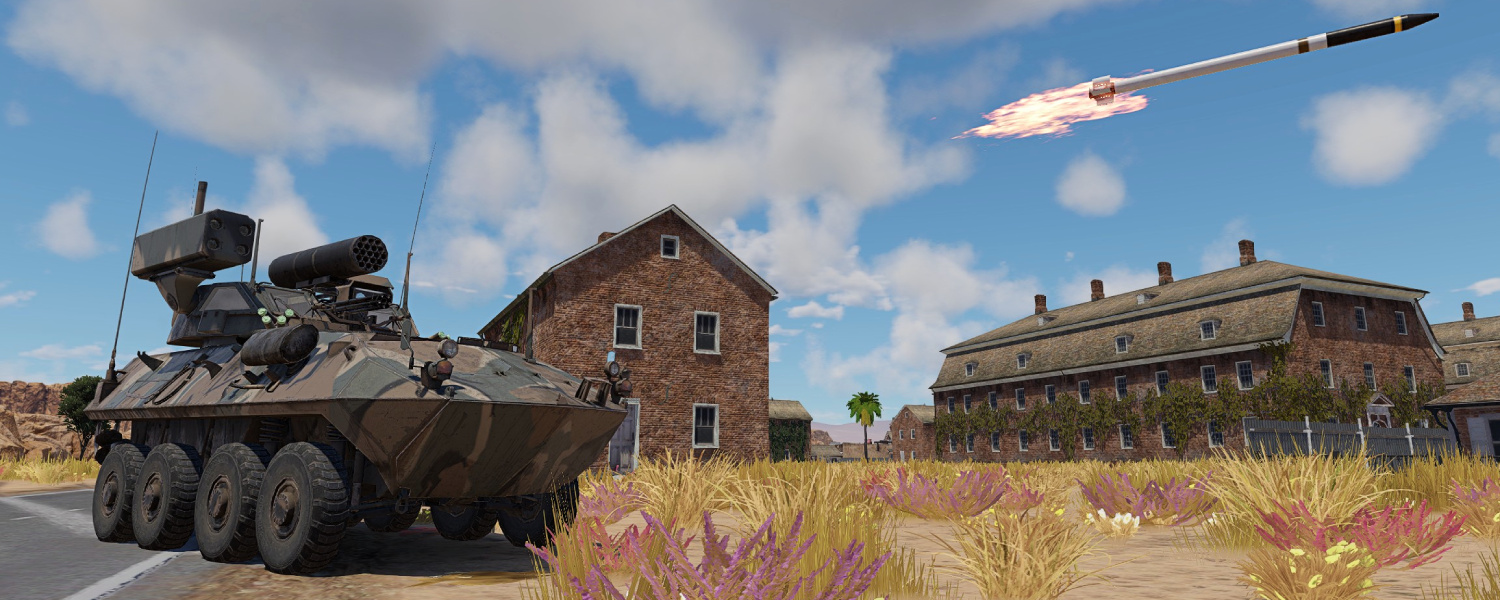
In the game, the LAV-AD can operate solo, capturing points and acting as a fast scout. When playing as part of an allied group, it becomes an excellent support vehicle, protecting teammates from both lightly armored ground vehicles and aircraft!
España (Rank III)
Historical note
At the beginning of the 20th century, Spain embarked on plans to rebuild its navy and equip it with the most promising type of warship of the era – the dreadnought. As a result of a competition held in 1908-1909, the winning design was a battleship from the Spanish SECN society, created with the participation of British companies. The final design, revised for improved protection and seakeeping, turned out to be the world's smallest dreadnought: about 140 meters in length and a displacement of approximately 16,000 tons. All three ships of the class — España, Alfonso XIII, and Jaime I — were laid down at the Ferrol shipyard using British components.
The lead ship, España, entered service in 1913 but was lost in 1923 after running aground on rocks. By the mid-1930s, plans existed for its modernization and return to service, but the outbreak of the Civil War thwarted them. The name España was transferred to the second ship of the class, Alfonso XIII. It was used to blockade and bombard Republican ports and was lost in 1937 after striking a mine.
SWOT Analysis
- Strengths: Good armament, decent protection, small dimensions, good maneuverability.
- Weaknesses: Mediocre speed, weak horizontal protection (decks), vulnerability to aerial attack.
- Opportunities: The world's smallest dreadnought! Respectable armament and solid armor – everything needed for a successful front-line fighter.
- Threats: More modern battleships and battlecruisers with guns of 340+ mm caliber, torpedoes, enemy aircraft.
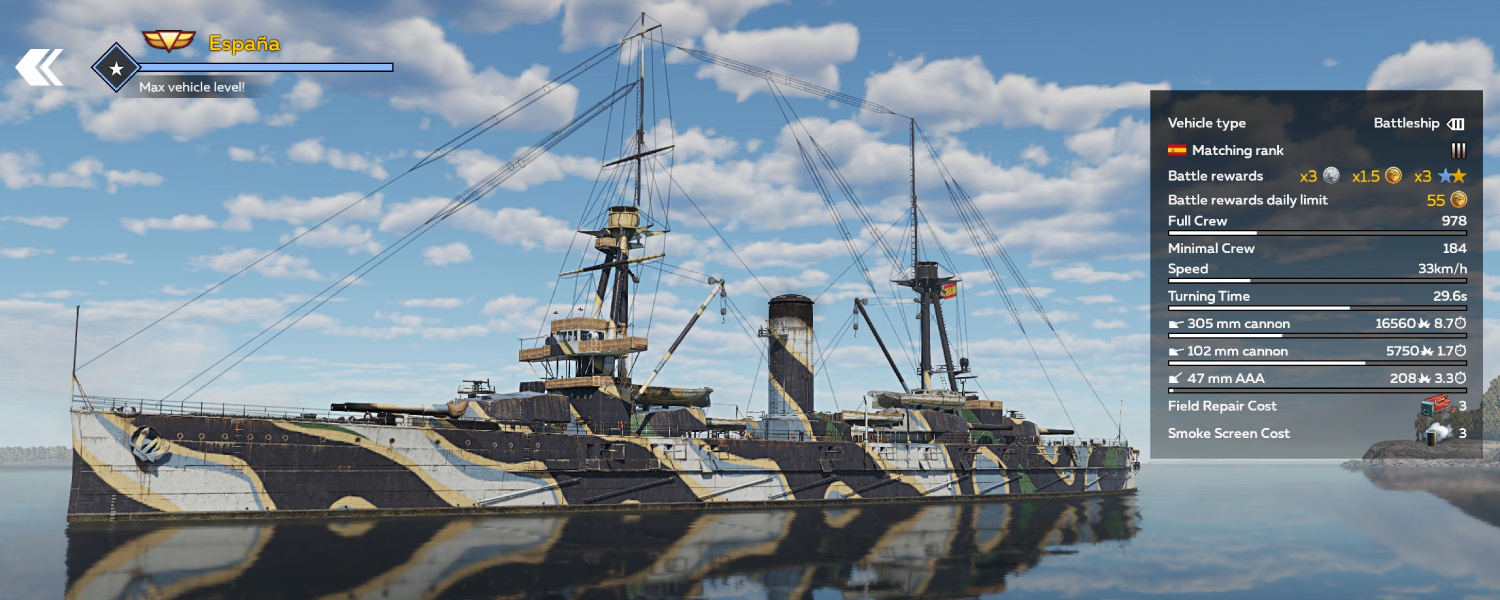
In battle
The España-class dreadnought battleship is not only the first Spanish ship in the game but also the world's smallest dreadnought! Nevertheless, this little one boasts all the attributes of a serious warship of its time.
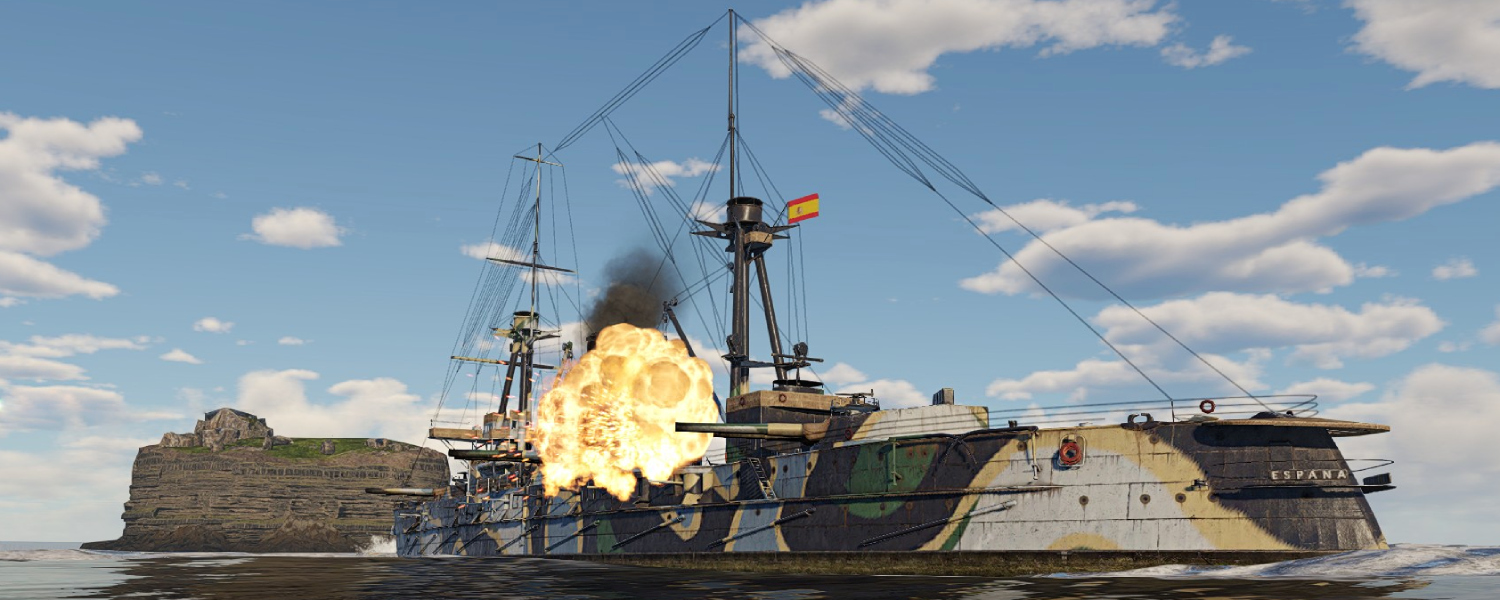
The España's main battery consists of eight 305 mm guns in four turrets, and its secondary battery comprises twenty 102 mm guns. Its protection is also respectable – despite the relatively small displacement, engineers managed to achieve a quite modern level of citadel protection.
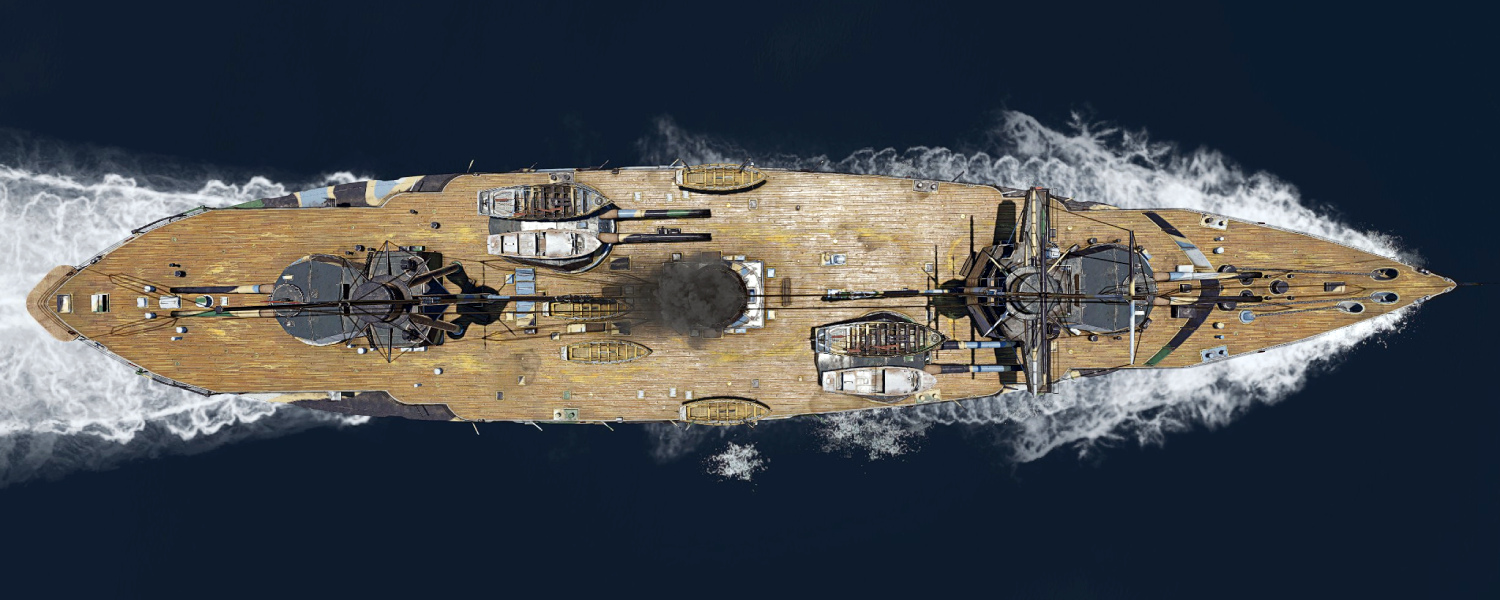
The Spanish battleship's speed is not high, but it is not too slow either. However, the newcomer has an important advantage: alongside the American USS South Carolina-class, the España is one of the most compact dreadnoughts in the world, with a hull length not exceeding 140 meters. This compactness gives it a small turning radius, meaning the commander can react to threats faster than most of its classmates.
BI (Rank IX)
Historical note
In the early 1940s, development of the experimental BI (Bereznyak-Isaev) aircraft with a liquid-propellant rocket engine began at OKB-293. The project was created as an interceptor for defending key installations, a role facilitated by the rocket engine's high rate of climb. After the start of the Second World War, work accelerated, and the first flying prototype was built in 1942. Flight tests confirmed the machine's high dynamic characteristics. However, during testing, fundamental shortcomings typical of early rocket aircraft became apparent: extremely short flight duration due to enormous fuel consumption, as well as the complexity and danger of handling the volatile propellant components.
By the time testing was completed, the aircraft's combat value as an interceptor was called into question due to the emergence of more promising turbojet engines. The experience gained from creating the rocket-powered BI was later used in other rocket and jet programs.
SWOT Analysis
- Strengths: Exceptional rate of climb, good top speed.
- Weaknesses: Not the most powerful armament, difficult to control at high speeds.
- Opportunities: The fastest climb rate in the game, swift diving attacks.
- Threats: More maneuverable fighters in horizontal turns, aircraft with powerful armament (e.g., with 30 mm cannons).
In battle
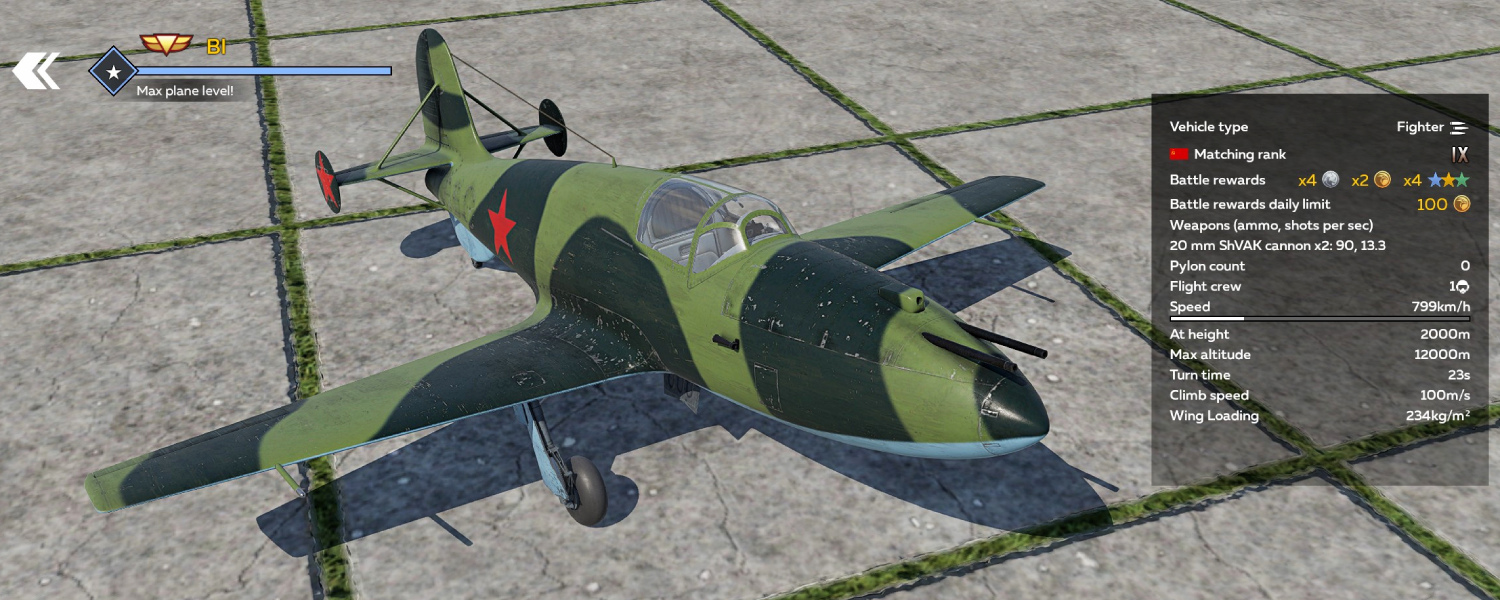
The second rocket-powered fighter in the game – meet the Soviet experimental BI interceptor! Incredible rate of climb, low weight, and compact dimensions – the Red Star rocket is rushing into War Thunder Mobile!
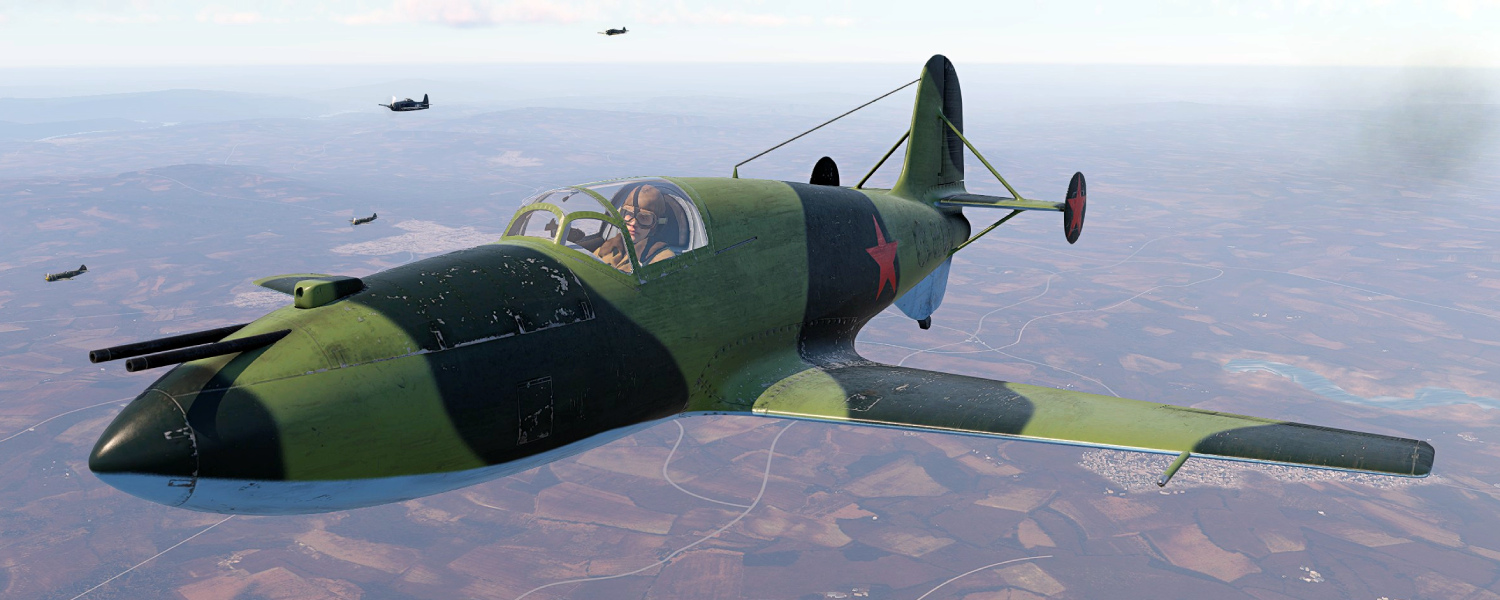
Following the German Komet, the Soviet rocket-powered BI fighter is appearing in the game. It possesses one of the highest climb rates in its rank! This rocket acceleration will be the key advantage of this small aircraft, allowing the pilot to be the first to reach an advantageous altitude and quickly break away from many pursuers, including jets.
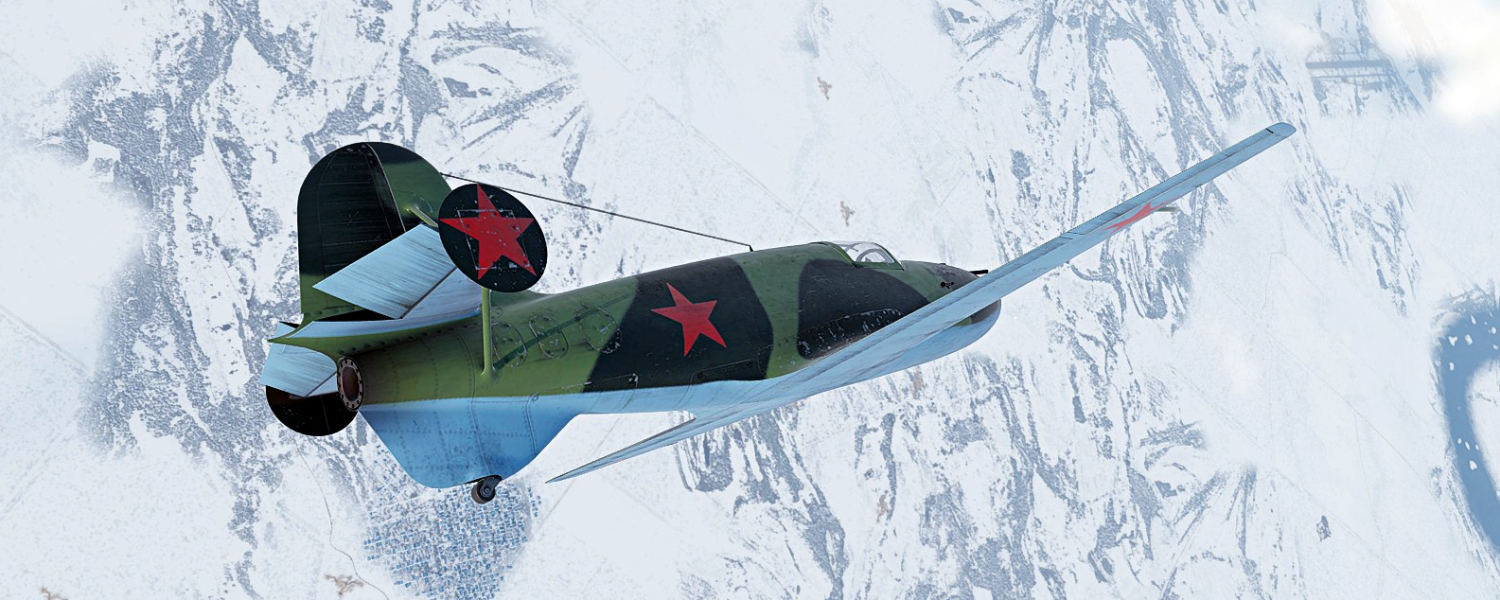
The BI carries lighter armament than the Me 163 – two 20 mm ShVAK cannons. With these, the fighter can effectively engage enemy aircraft, but destroying bombers may require several accurate passes. The BI's maximum speed is about 800 km/h, meaning it will be faster than all piston-engine fighters in level flight. However, trying to compete with jets in a straight-line race can be dangerous.
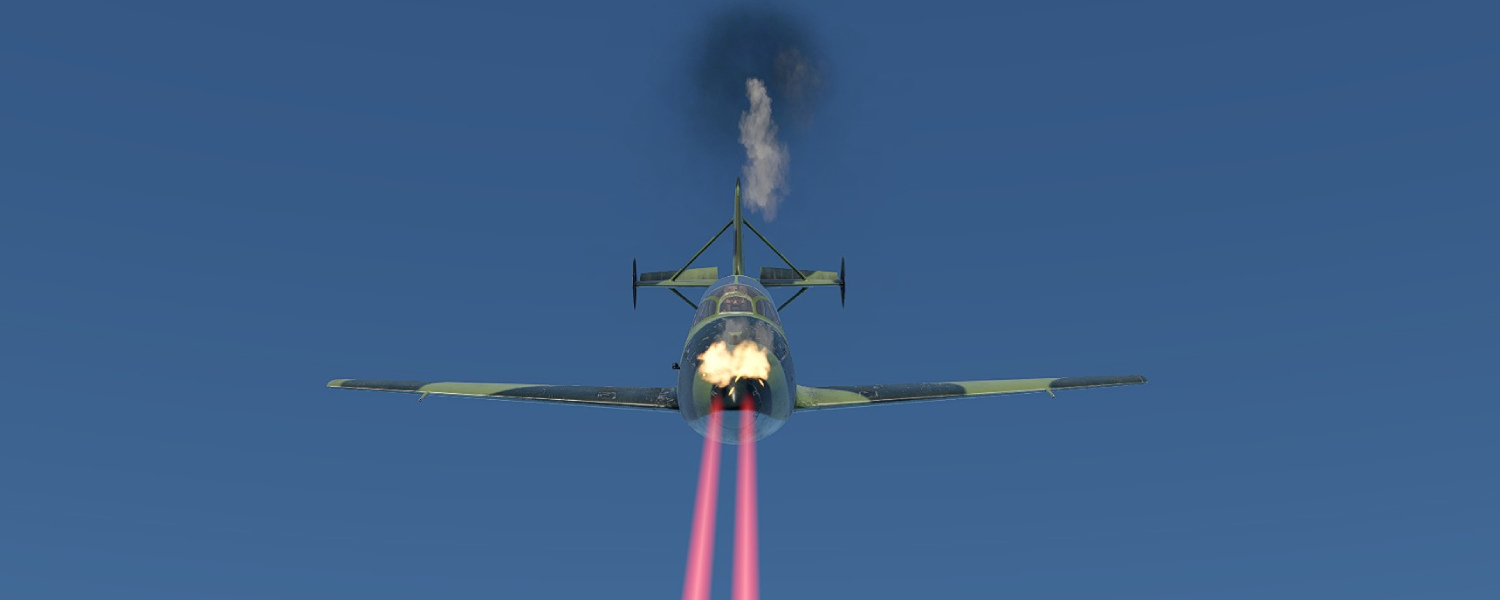
The best tactic for the BI is a rapid climb at the start of a battle and diving attacks on enemies followed by a climb back to altitude. If used skillfully, only a few will be able to catch the BI! However, the pilot must remember the fighter's relatively light armament, which requires careful aiming, as well as handling issues at extreme speeds – the little BI has the smallest wingspan among fighters in the game.
Seasonal Challenge
After completing the event tasks between February 9th and February 16th (ends at 07:00 GMT), you can receive the maximum discount on the Seasonal Offers!
Don’t miss the fantastic chance to buy great premium vehicles at a discount and receive bonus Big Trophy keys from the “Frost Edge” season.