[Seasonal Offer] Multi-Barreled Threat
Unique ground, naval and air vehicles – in seasonal offers only!
Seasonal Offers
Commanders! 🚩 From March 5th to March 12th, 2026 (ends at 07:00 GMT), as part of a Seasonal Offer, a new set of unique premium vehicles will be available to you. After completing special Seasonal Challenges, you will be able to purchase it with a maximum discount:
- In the Tank Campaign: QN506 + 4 Keys for the Big Trophy from the “Steel Dragons” season + Back-ups x5, Repair Kits x100, Medical Kits x100, Fire Extinguishers x50.
- In the Ship Campaign: HMS Agincourt + 2 Keys for the Big Trophy from the “Steel Dragons” season + Smoke Generators x250 + Naval Supply x250.
- In the Aviation Campaign: FR-1 Fireball + 2 Keys for the Big Trophy from the “Steel Dragons” season + Back-ups x10.
QN506 (Rank XI)
Historical note
At the Airshow China aerospace exhibition in 2018, the Chinese company Gaode Defense unveiled an experimental tank support combat vehicle based on the ZTZ59 main battle tank. Clearly inspired by the Russian BMPT "Terminator," the project represents an attempt to modernize an obsolete tank platform into a highly effective support vehicle capable of a wide range of combat tasks.
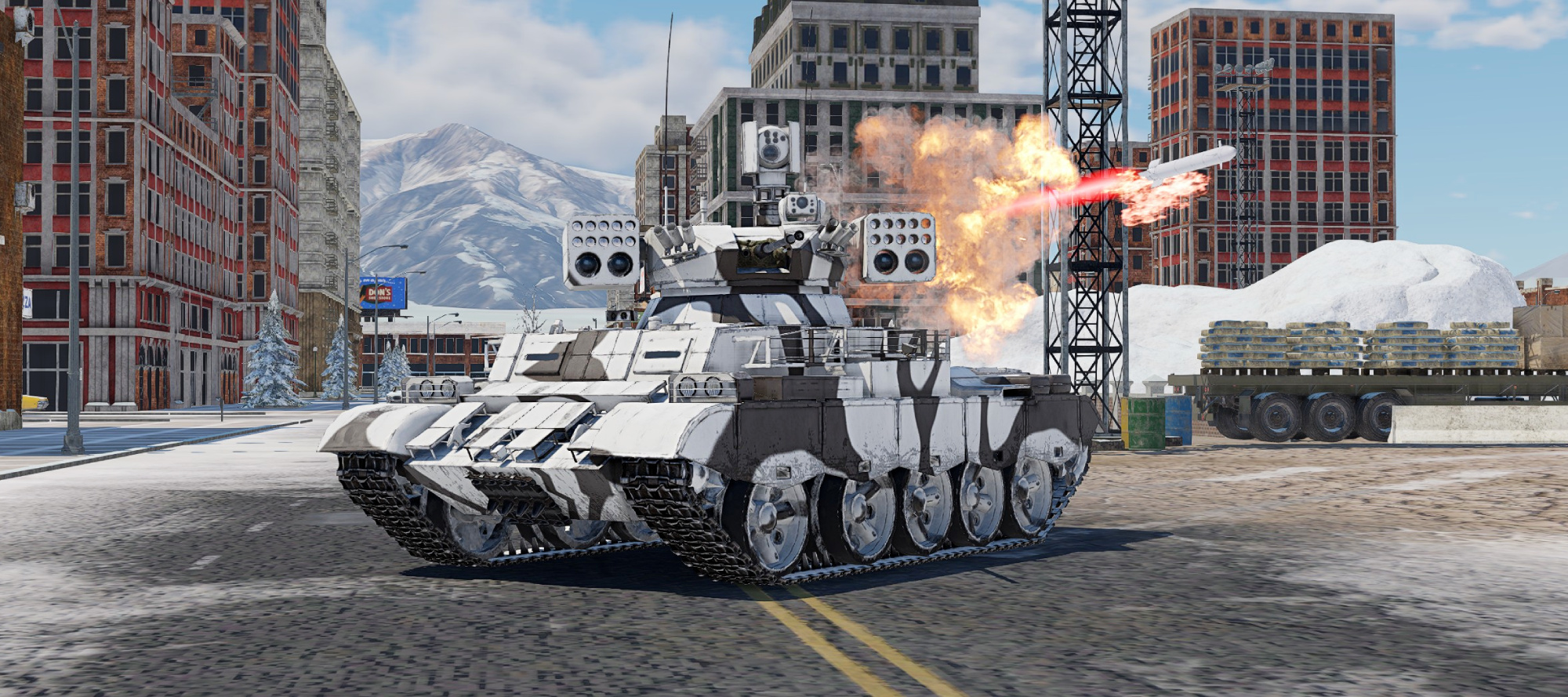
The vehicle underwent a radical redesign: the crew is seated in the hull, while all primary armament is housed in an unmanned turret. The combat module includes a 30mm automatic cannon, a coaxial 7.62mm machine gun, and observation and fire control systems. Its strike capabilities are significantly enhanced by a combination of missile armament: four QN502 ATGMs and twenty small QN201 guided missiles, designed to engage lightly armored targets. The base chassis protection is reinforced with FY-2 explosive reactive armor blocks.
SWOT Analysis
- Strengths: an unmanned turret with powerful armament – a 30mm autocannon and two types of ATGMs, including fire-and-forget missiles.
- Weaknesses: mediocre mobility, low survivability in direct engagements.
- Opportunities: its unique weaponry makes the QN506 an ideal vehicle for supporting allied tank advances.
- Threats: vulnerable to any hits from MBT cannons and ATGMs. Flanking attacks from SPAAGs or IFVs with rapid-fire autocannons also pose a significant threat.
In battle
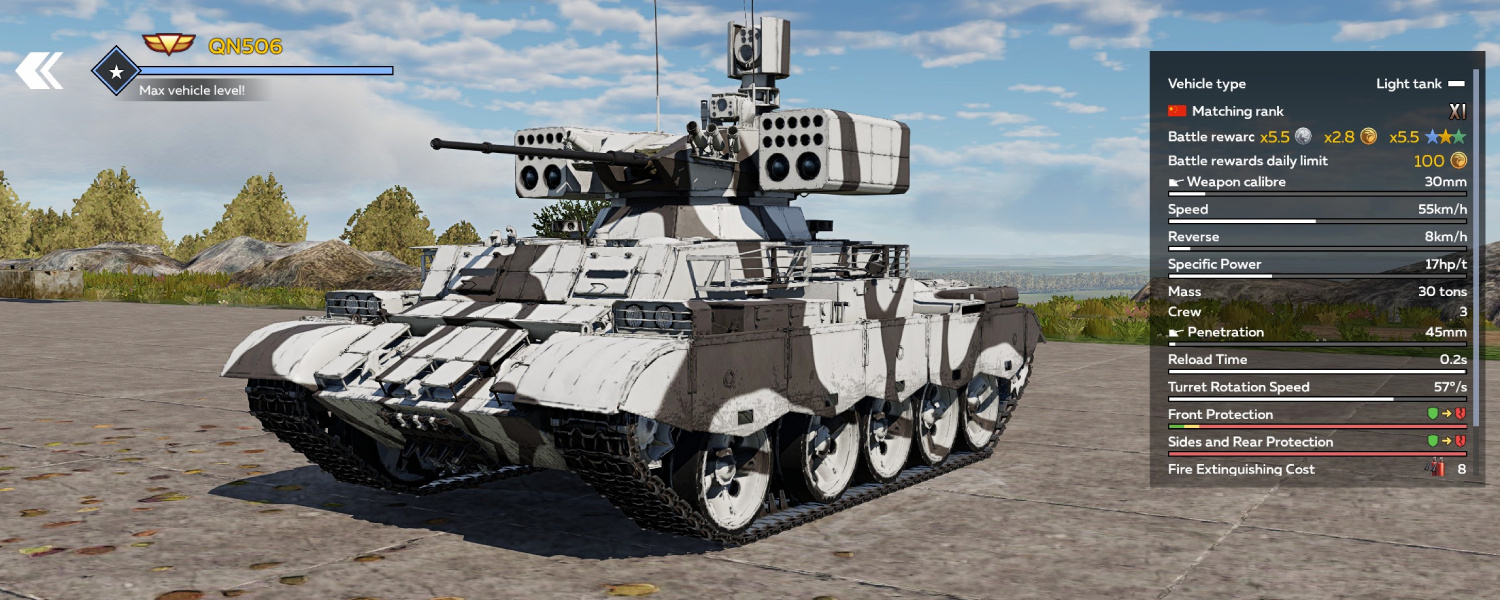
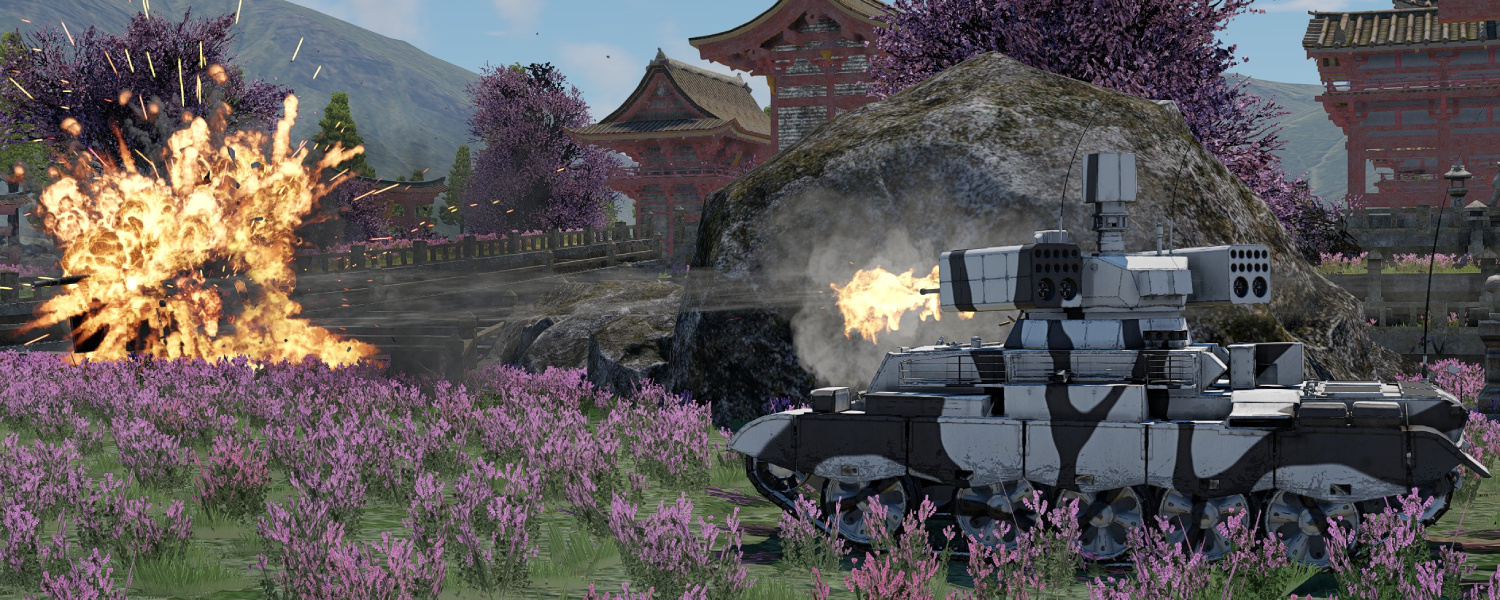
The QN506 is the embodiment of the modern tank support combat vehicle concept. Besides its tracked chassis and 30mm autocannon, its key feature is its diverse missile armament. Mounted in launchers on the sides of the turret are four transport-launch containers for QN502 ATGMs (fire-and-forget mode), as well as 20 rails for small QN201 laser-guided missiles. The former are equipped with tandem warheads and are best suited for hunting tanks at long range, while the latter excel against lightly armored vehicles.
View the characteristics of the QN506’s shells:
View the characteristics of the QN506’s shells:
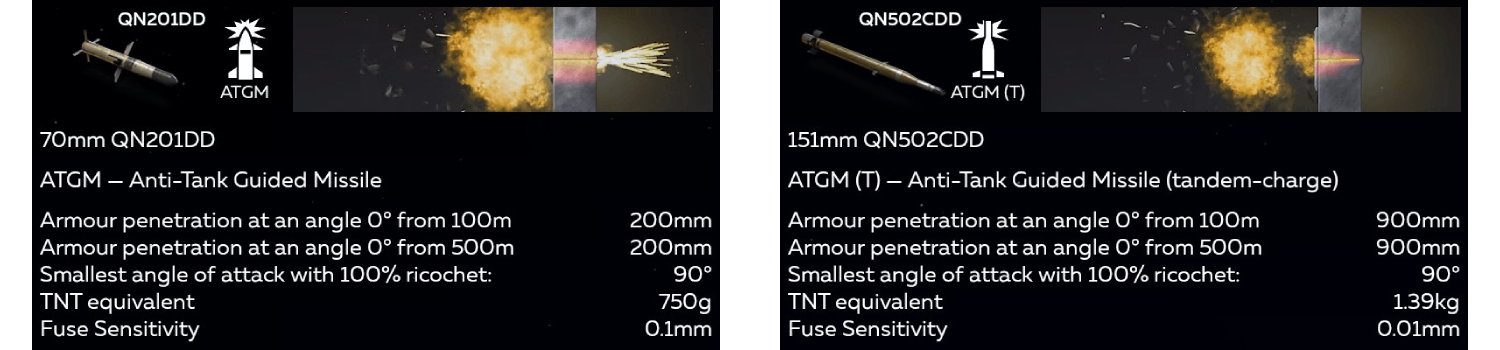
The powerplant and running gear are inherited from the ZTZ59 without significant changes, so record-breaking mobility is not to be expected – its top speed does not exceed 56 km/h. Thanks to its tank base, the QN506's protection is superior to most ATGM carriers on light chassis. The FY-2 ERA blocks and the unmanned turret also contribute to its survivability. However, modern kinetic rounds will penetrate the QN506's armor without trouble, so care should always be taken to keep the hull behind cover.
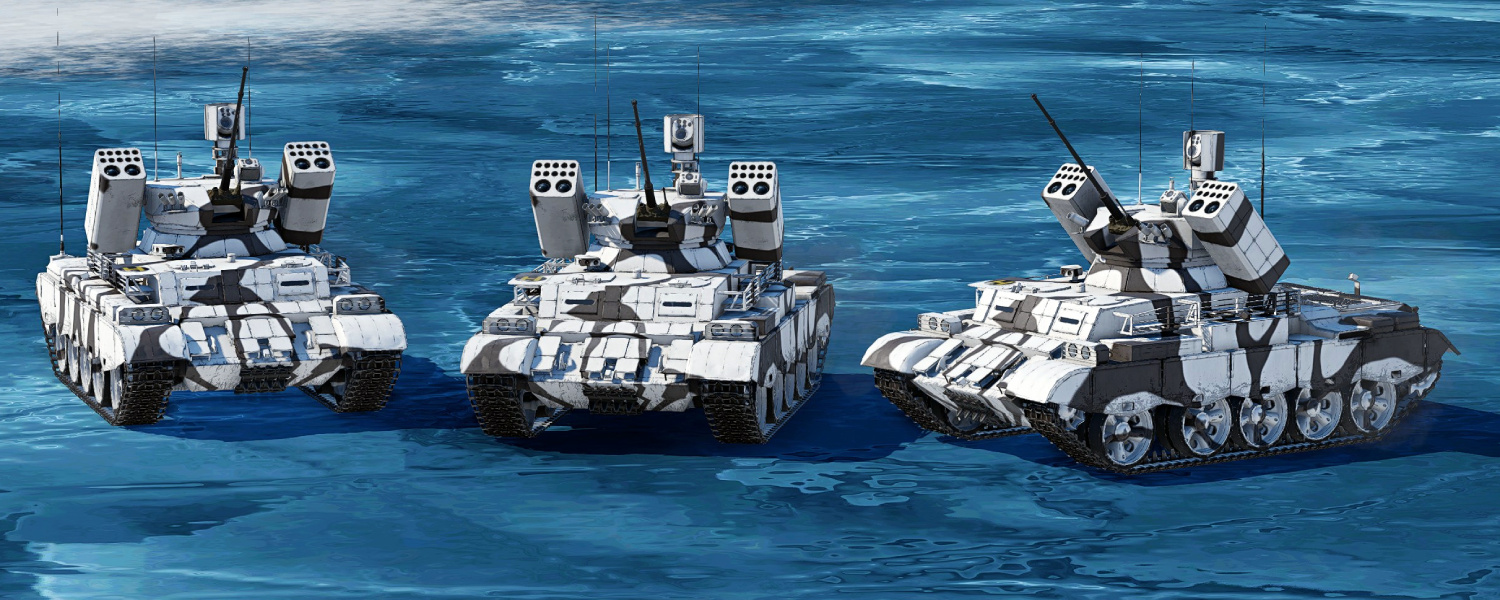
Due to its limited mobility but excellent armament, the QN506 is best utilized in squad play as a support vehicle – which is, after all, exactly what it was designed for!
HMS Agincourt (Rank III)
Historical note
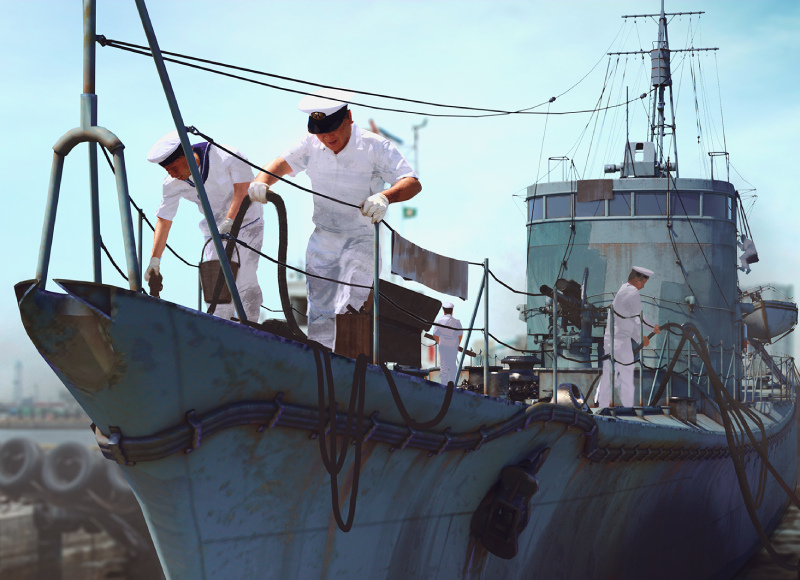
The battleship HMS Agincourt was ordered from the British shipyard Armstrong Whitworth by the Brazilian government in 1911 under the name Rio de Janeiro. However, Brazil's severe economic difficulties forced it to put the unfinished vessel up for sale. In December 1913, it was purchased by the Ottoman Empire and renamed Sultan Osman I. The ship was nearly ready for delivery when World War I began. On August 3rd, 1914, the British government requisitioned it, along with another Turkish dreadnought, Reşad V, fearing the strengthening of enemy naval forces. Commissioned into the Royal Navy as HMS Agincourt, the ship joined the 4th Battle Squadron of the Grand Fleet. Its most significant combat action was the Battle of Jutland.
After the war, the battleship was present at the surrender of the German High Seas Fleet. In 1919, it was placed in reserve. The Admiralty's attempts to resell the ship to Brazil were unsuccessful, and the Washington Naval Treaty prohibited further use of the dreadnought due to tonnage limitations. On January 22nd, 1923, HMS Agincourt was sold for scrapping and was broken up by January 1925.
SWOT Analysis
- Strengths: Unusually powerful armament consisting of fourteen 305mm guns in seven (!) main-caliber turrets.
- Weaknesses: Low maneuverability, mediocre protection.
- Opportunities: A record holder for the number of main-caliber barrels among early battleships – an excellent damage dealer for Rank III!
- Threats: Enemy battleships with large-caliber shells, torpedo bombers, and submarines (due to weak torpedo defense).
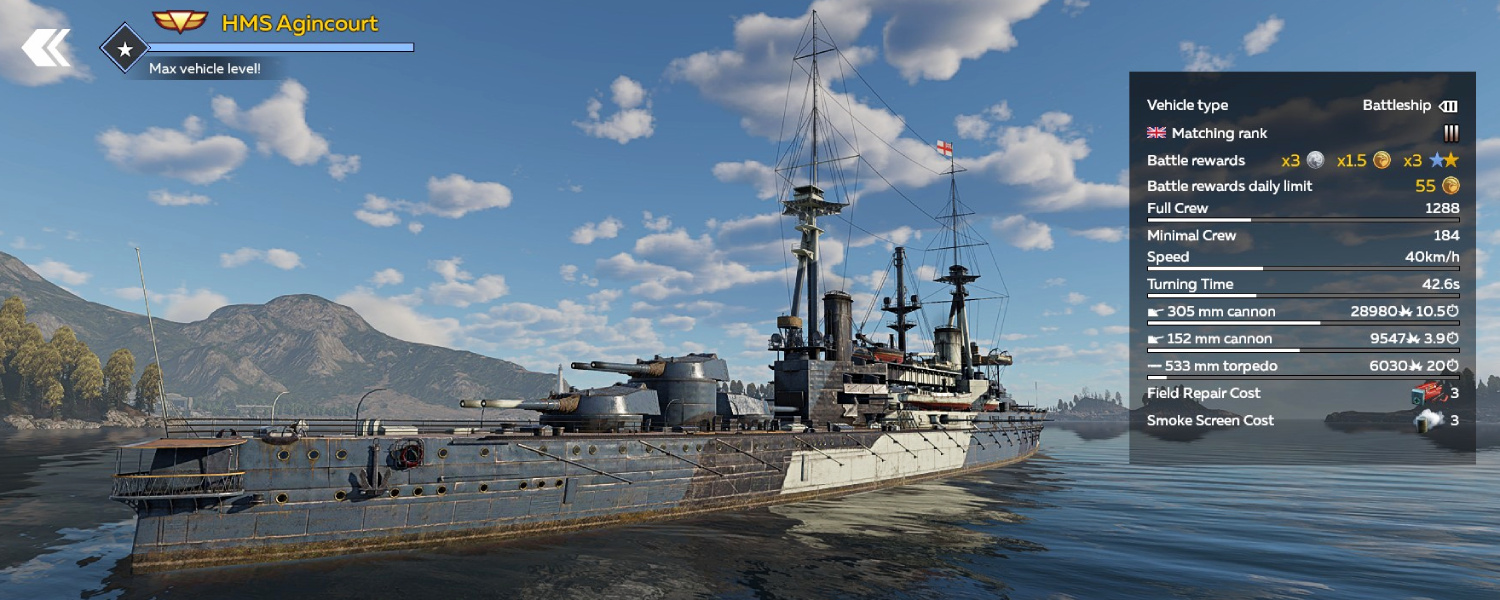
In battle
HMS Agincourt is an incredible ship! Not only did she serve in the navies of three maritime powers, but she also boasted the most numerous arsenal among the dreadnoughts of her era. This floating artillery battery will soon be arriving in War Thunder Mobile.
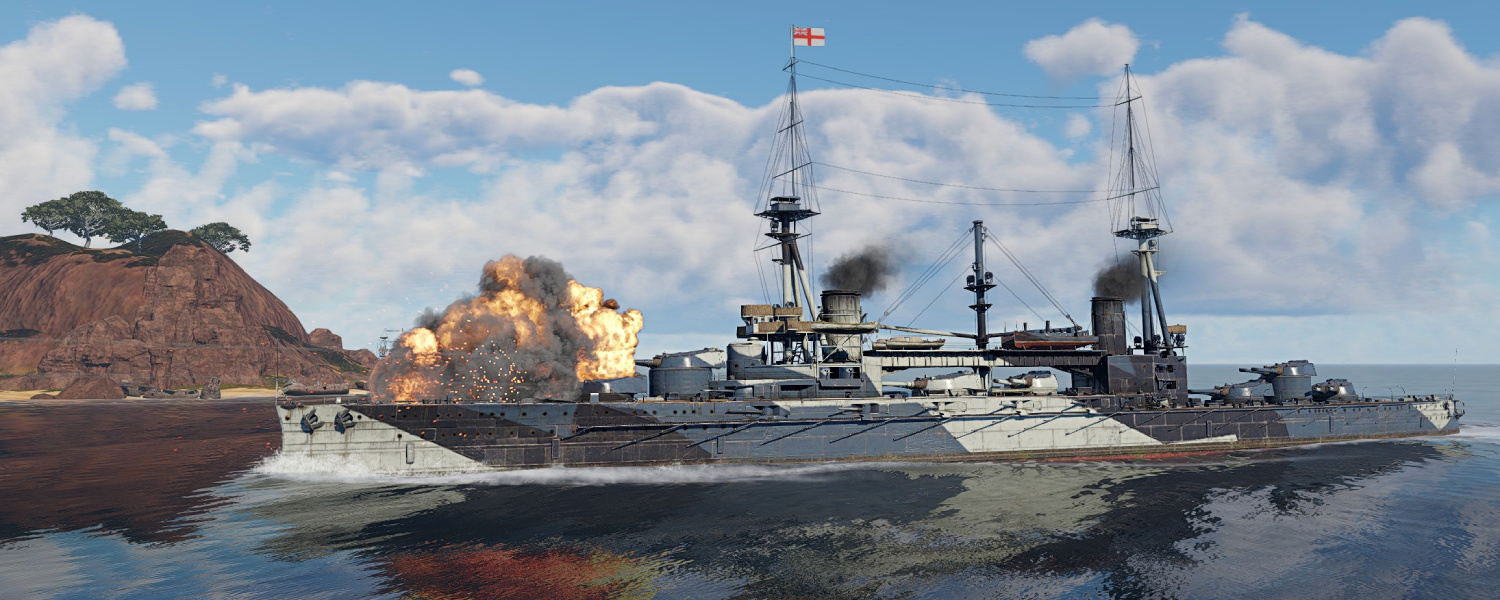
The main feature of HMS Agincourt is her arsenal. Fourteen 305mm guns are mounted across seven main-caliber turrets. Another eighteen secondary-caliber barrels stand ready for action at close range. With this many turrets, HMS Agincourt can continue firing even after sustaining critical damage to part of her artillery.
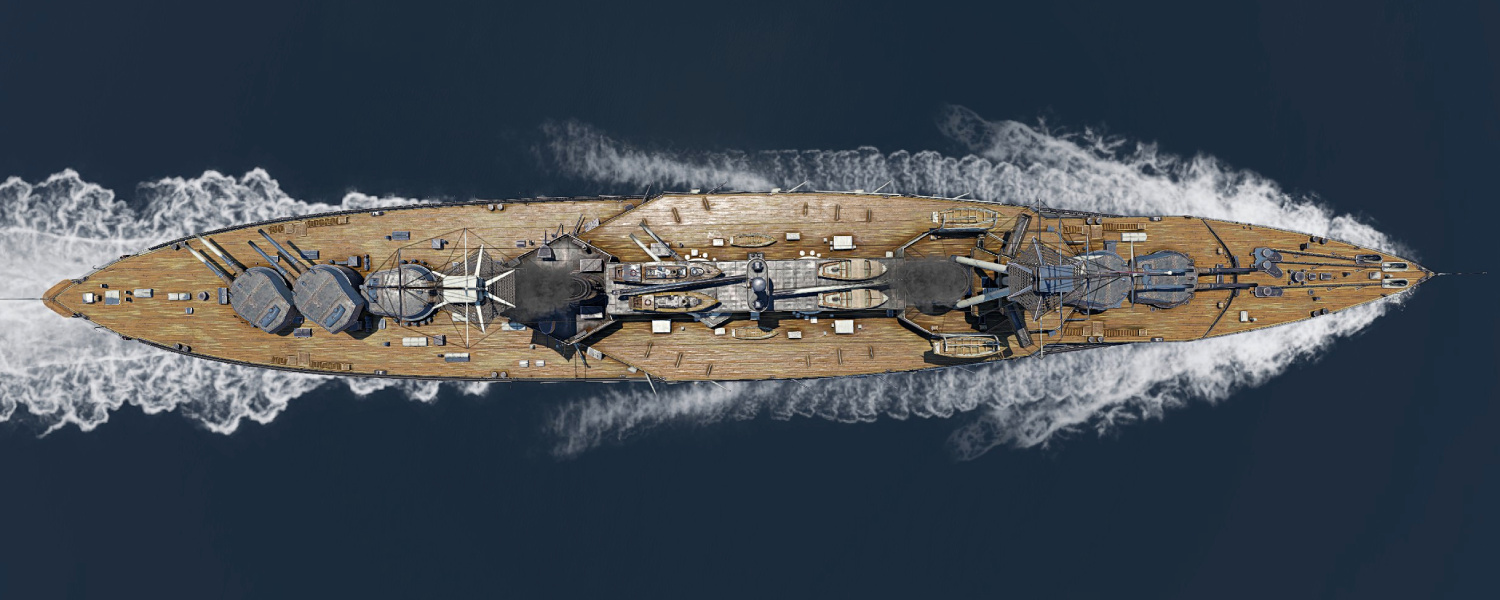
In terms of mobility and protection, HMS Agincourt is a typical representative of early British dreadnoughts. Her speed is low, her turning radius is large, and her armor is insufficient to withstand shells from other battleships. For these reasons, HMS Agincourt will perform most effectively in a group, where allies can shield this sluggish Briton from enemy fire, allowing her to fully unleash her incredible firepower!
FR-1 Fireball (Rank V)
Historical note
In the early 1940s, the US Navy faced the problem of being unable to operate the first jet aircraft from carriers due to their long takeoff runs. Searching for a solution, the Navy settled on the concept of an aircraft with hybrid propulsion. At the end of 1942, the competition winner was Ryan Aeronautical with the FR-1 Fireball project. The aircraft was equipped with a piston engine in the nose and a turbojet engine in the tail. This configuration allowed it to take off and land using the piston engine, while using the jet for a sharp speed boost in combat.
Tests confirmed the concept's potential but revealed serious design flaws. Despite the problems, the US Navy, in desperate need of a carrier-based interceptor, accelerated the Fireball's adoption. The first production machines reached squadrons in March 1945, but they did not see combat before the war's end. Following Japan's surrender and due to ongoing accidents, the order for additional aircraft was canceled. By 1947, the remaining fleet was completely withdrawn from service.
SWOT Analysis
- Strengths: Hybrid propulsion – high acceleration, good rate of climb, decent maneuverability, and suspended armament options.
- Weaknesses: Relatively weak fixed forward armament – 4x12.7mm machine guns.
- Opportunities: A unique fighter-bomber combining the maneuverability of a piston-engine aircraft with the ability to quickly accelerate and climb using jet thrust.
- Threats: Fighters that surpass the Fireball in speed and maneuverability; loss of energy.
In battle
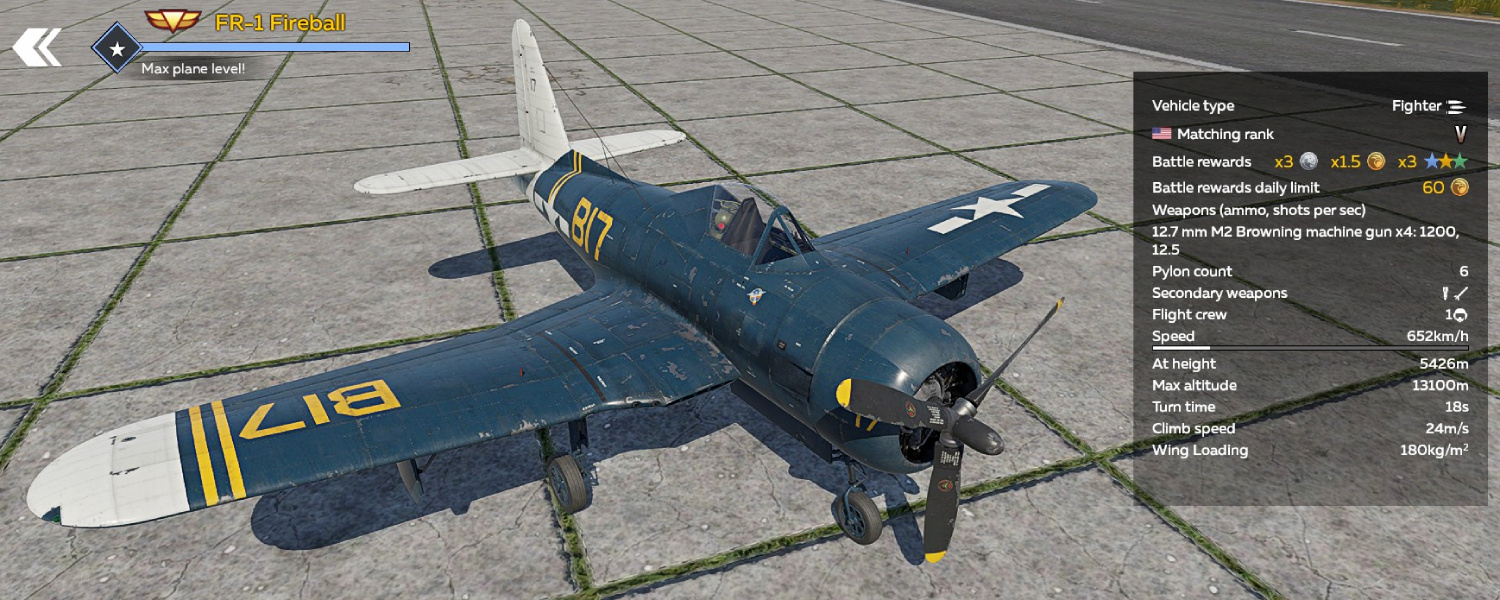
The FR-1 Fireball is the first aircraft in War Thunder Mobile to feature a mixed powerplant: a piston Wright Cyclone R-1820-72W in the front and a jet General Electric J31 in the rear. As a result, while the aircraft doesn't accelerate to the speeds of dedicated jet fighters, it can maintain a high speed for its rank in level flight for extended periods.
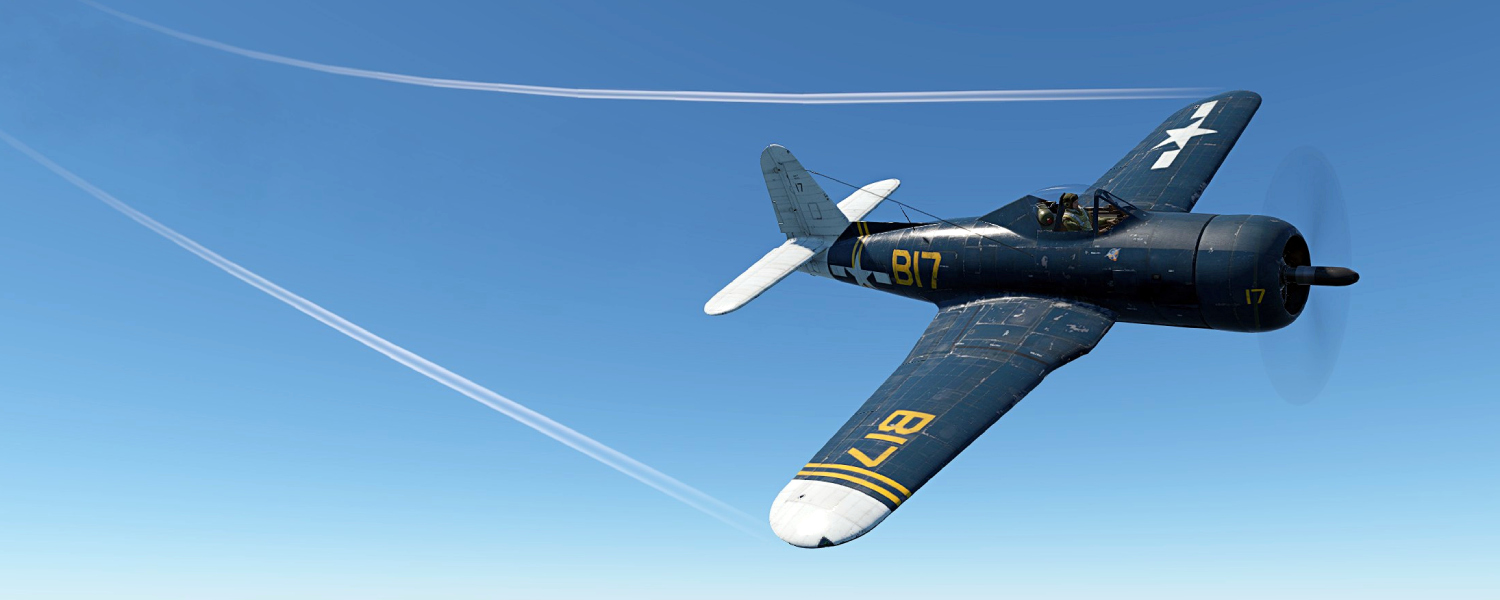
Jet thrust is especially useful for quickly gaining altitude or breaking away from pursuit. Additionally, the Fireball boasts decent maneuverability and can hold its own in turn fights against piston-engine opponents.
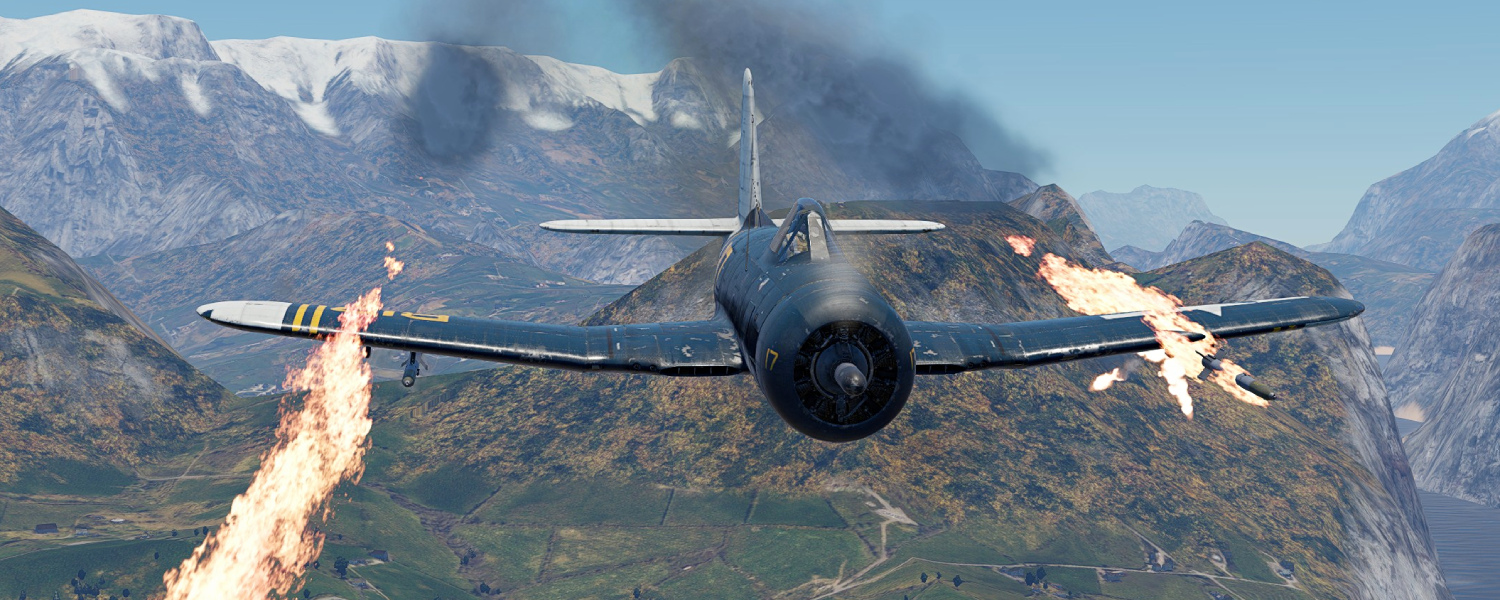
The Fireball's armament consists of four 12.7mm M2 machine guns. They allow it to deal with fighters without much trouble, but larger bombers will require more effort. However, besides its forward-firing armament, it has an arsenal of suspended ordnance: four HVAR rockets or a pair of 500 or 1000 lb bombs. Thanks to its good handling, you can destroy several ground targets at the start of a battle, then gain altitude on jet thrust to secure air superiority!
Seasonal Challenge
After completing the event tasks between March 5th and March 12th (ends at 07:00 GMT), you can receive the maximum discount on the Seasonal Offers!
Don’t miss the fantastic chance to buy great premium vehicles at a discount and receive bonus Big Trophy keys from the “Steel Dragons” season.